
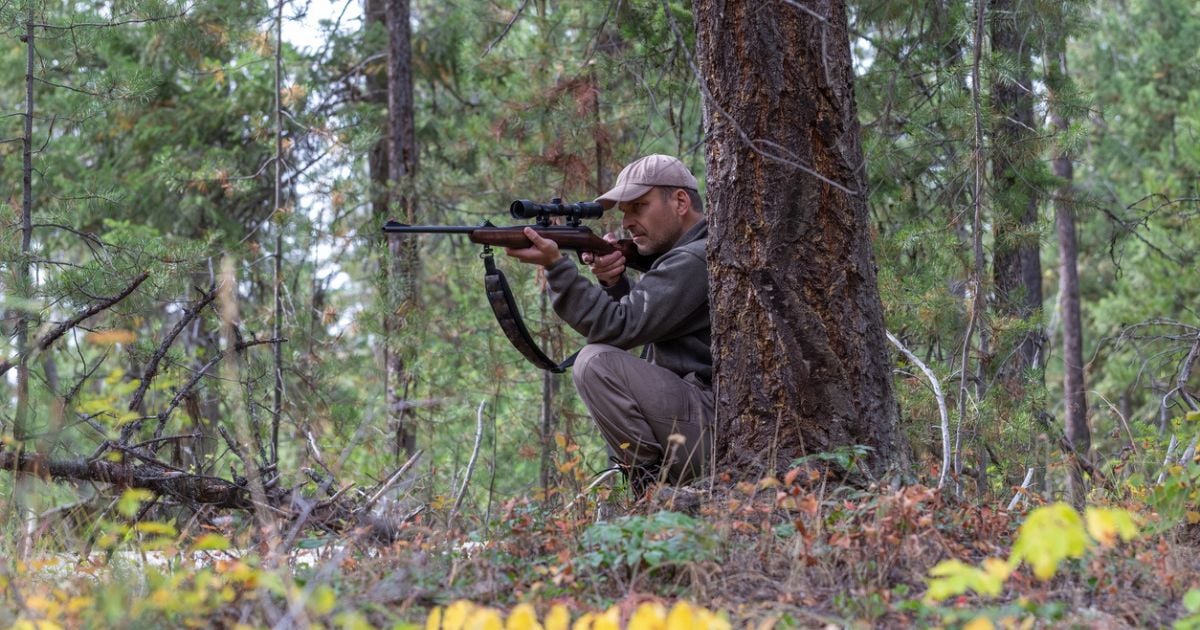
Why Range Shooting Does Not Always Translate to Field Shooting
Range shooting is controlled, level, and predictable. Field shooting is uneven, improvised, and constantly changing. That difference affects almost everything about how you take a shot.
If your training only happens on flat ground, you’re practicing in ideal conditions. The field rarely gives you that. Adjusting to uneven terrain isn’t just a small step, but learning a different skill set.
The Reality of Uneven Terrain and Shooting Angles
Flat ranges remove many of the variables that affect field accuracy. In hunting environments, terrain changes how you position the rifle, manage stability, and take the shot.
Slopes, Angles, and Rifle Alignment
Most hunting shots involve some kind of angle: uphill, downhill, or across uneven terrain. That changes both your body position and bullet impact. A common mistake is shooting as if the terrain were flat. Even small angle changes can shift your point of impact, especially at longer distances.
Uneven ground also makes rifle cant more common. When you’re leaning into a hillside or adjusting your stance to stay balanced, it becomes harder to keep the rifle level. Small alignment issues can turn into missed shots.
Obstacles Change Your Shooting Position
Terrain also affects how you take the shot.
Rocks, brush, tall grass, and trees often limit your shooting lane or block your preferred position. Instead of building an ideal setup, you adjust around whatever is in front of you.
That usually means less stable body positioning, awkward rifle support, and more movement during the shot.
Footing and Perspective Affect Accuracy
Your footing is the foundation of the shot. Loose dirt, gravel, slopes, and uneven surfaces all reduce balance and rifle control.
At the same time, angles change how the target looks:
- Distance can appear distorted.
- Depth perception becomes less reliable.
- Visual reference points shift.
If you misjudge the shot angle or target distance, small errors stack quickly.
Why Stability Gets Harder in the Field
Most missed shots in the field are not caused by a lack of shooting skill alone. Instability from terrain, support, and body position all affect how consistently the rifle tracks during the shot.
Improvised Support Creates Movement
In the field, you use what’s available: packs, rocks, logs, or uneven ground. The problem is that none of those creates consistent support. The rifle may feel stable at first, but small movements build once you settle into position.
That instability expands your wobble zone:
- Your sight picture drifts more.
- The rifle takes longer to settle.
- Timing the shot becomes harder.
Poor support also changes recoil behavior. Instead of tracking straight back, the rifle may shift or lift unevenly under recoil. That makes follow-through less consistent and increases movement during the shot.
Uneven Terrain Disrupts Alignment
When you’re leaning into a slope or adjusting around obstacles, it becomes harder to keep the rifle level and naturally aligned with the target. Small amounts of rifle cant introduces horizontal error, especially at distance.
At the same time, the natural point of aim starts to break down. Instead of the rifle naturally resting on the target, you end up forcing it into position with muscle tension. That creates fatigue, inconsistent holds, and constant correction during the shot.
The more you fight the rifle, the less repeatable your accuracy becomes.
The Role of Shooting Support in Field Accuracy
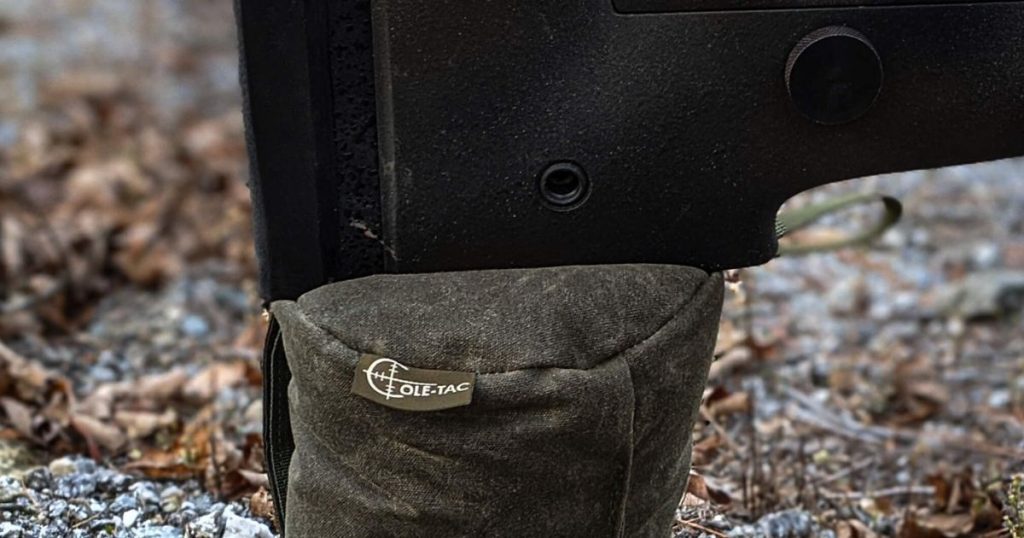
Once terrain starts working against your position, support becomes less about comfort and more about consistency.
Support Helps Stabilize Imperfect Positions
Good shooting support helps reduce the instability that comes with shooting in the field. Instead of relying entirely on muscle control, you create more consistent contact between the rifle, the terrain, and your body.
That matters when shooting from slopes or rocky ground or managing awkward body alignment.
Support Helps Maintain Rifle Alignment
Uneven terrain makes it easier for the rifle to shift or tilt during the shot. Support helps maintain a more consistent rifle level, better recoil tracking, and a more stable point of aim.
This becomes more important as distance increases, where small alignment issues become larger misses.
Consistency Matters More Than Perfect Conditions
The goal in the field is repeatability. Good support helps you build more consistent positions across changing terrain and shooting angles. That allows you to spend less time fighting instability and more time focusing on the shot itself.
How to Train for Real-World Field Shooting
If you want your shooting to hold up in the field, your training has to match it. Practice on:
- Slopes and uneven surfaces
- Rocky or unstable terrain
- Areas with brush, obstacles, and awkward shooting lanes
This helps you learn how your balance, shooting position, and rifle control change once the ground stops being predictable.
Practice Building Positions Quickly
Real hunting scenarios rarely give you unlimited setup time. So instead of shooting from a ready-made position every time, practice building the shot from the ground up.
For example:
- Set a short time limit to find support and build a stable position.
- Start standing with your rifle slung, then move into a kneeling or seated position before taking the shot.
- Practice shooting from behind barriers or props.
- Force yourself to adjust when your preferred setup is unavailable.
Also, work from multiple shooting positions and not just prone or bench setups. In the field, kneeling beside a tree or sitting on a slope may be more realistic than lying flat.
If you cannot train in the field regularly, you can still add variation at a range:
- Move between shooting positions after each shot string.
- Use barricades or range props to simulate awkward angles.
- Practice timed drills instead of slow bench shooting only.
- Set your gear on uneven surfaces whenever possible (rather than on flat benches).
The goal is to get comfortable building stability quickly, even when conditions are not ideal.
Build Consistency With Support and Repetition
Field shooting becomes more reliable when your setup is repeatable. That doesn’t mean every position looks identical. It means you follow the same process each time:
- Find stable footing first.
- Build solid rifle contact points.
- Settle behind the rifle naturally instead of forcing alignment.
You can also practice using support in different ways:
- Resting against a pack or support bag from seated positions.
- Bracing the rifle against barricades or props.
- Switching between prone, kneeling, and seated setups during practice sessions.
Even at a flat range, you can train consistency by avoiding the same perfect setup every time. For example:
- Change your shooting position between groups.
- Practice building support without using a bench.
- Use timers to reduce setup time.
- Rebuild your position completely after each shot string instead of staying locked in place.
This helps you understand how your rifle behaves from different positions before you encounter those situations during a hunt.
Choosing the Right Support for Uneven Terrain
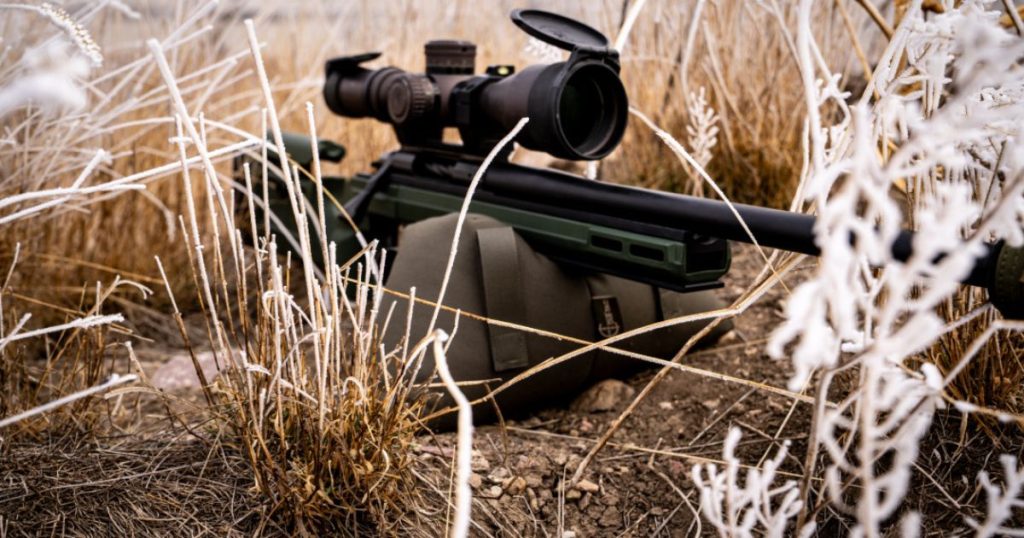
Field shooting requires support that adapts to changing terrain and positions.
For Uneven Surfaces
Supports that conform to changing surfaces are usually easier to stabilize than rigid rests or fixed supports. Flexible support options help create better contact between the rifle and the terrain, even on uneven ground.
Options like the Cole-TAC Revolution Bag and Trap Bag are designed to conform to obstacles rather than requiring flat surfaces. Their shapes allow the rifle to settle more naturally across changing terrain and shooting positions.
The Flat Bag is another useful option when shooting from narrow supports or smaller openings where a lower-profile bag works better.
For Multiple Shooting Positions
Field positions change constantly. One shot may be prone, while the next requires kneeling, seated support, or bracing against terrain.
Larger support options like the Cuddle Bag, Little Cuddle Bag, and Mega Bag are designed to fill gaps between the rifle, body, and terrain across a wide range of shooting positions. That added versatility becomes useful when the terrain does not allow a traditional setup.
For Lightweight Hunting Setups
Heavy support gear often gets left behind. If weight and packability matter most, lighter support options will fit better into your setup.
The Bitty Bag was designed as a compact support option that still provides stability for rifle shooting in the field without taking up much space in a pack. The Woobie Bag also keeps weight down while providing quick rear support for elevation control and positional shooting.
For Shooters Who Want Mounted Rifle Support
Some shooters prefer support that stays attached directly to the rifle for faster deployment and more consistent positioning.
The Cole-TAC Backbone Bag Frame system allows compatible bags to mount directly to the rifle while reducing shifting and movement during position changes. This type of setup helps maintain consistent support when moving between barricades, uneven terrain, and improvised shooting positions.
For more about choosing shooting bags, read A Shooter’s Guide to the Best Support Bags.
Closing the Gap Between Range and Field Shooting
Flat range practice still matters. It builds fundamentals, confidence, and familiarity with your rifle. But hunting environments introduce variables that flat ranges cannot fully replicate.
So the more your training reflects real terrain, the easier it becomes to build stable positions under pressure. And when you combine solid shooting fundamentals with reliable field support, your shots become more controlled and repeatable when you’re hunting.
For hunters looking to build more stable field positions, explore Cole-TAC Support Bags designed to adapt to changing shooting conditions.