
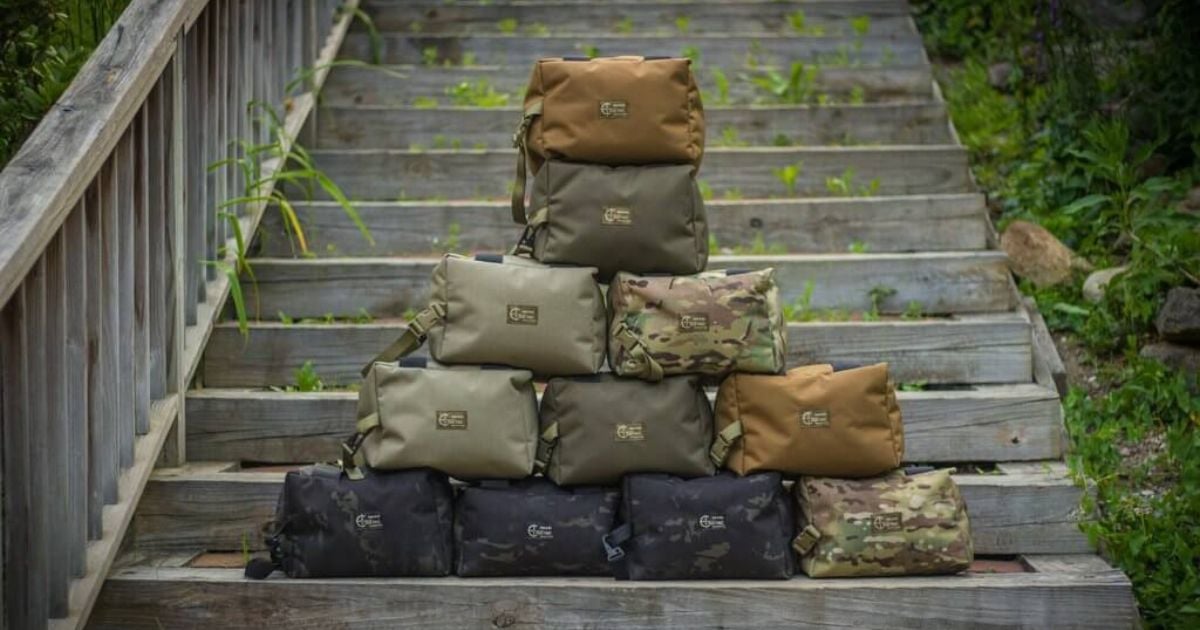
What Happens Inside a Shooting Bag After the Shot
The way a shooting bag handles recoil can affect how consistently it supports your rifle. Shooting bag fill compression plays a role in that response, but compression is only part of what happens. The fill also shifts, rebounds, and settles, all of which influence the bag’s movement after the shot.
What Happens Inside a Shooting Bag During Recoil
The process begins as recoil transfers force from the rifle into the bag. Here’s what happens inside the bag after the shot breaks.
1. Initial Force Transfer
As the rifle recoils, it transfers some of that force into the shooting bag. The amount and direction of force depend on how the rifle contacts the bag and how the rifle moves during recoil.
2. Compression and Deformation
As force moves into the bag, the fill shifts and compresses within the outer shell. The bag changes shape as it accommodates the load. This deformation is part of how the bag manages the force transferred into it.
Some fill materials resist movement more than others. Depending on how the bag responds, you might notice it compresses gradually or feels more abrupt under recoil.
3. Energy Dissipation and Rebound
As the fill moves and deforms, some of the transferred energy is dissipated through friction and other internal resistance.
However, not all the energy is dissipated during the initial compression. Some may contribute to rebound as the bag and its contents move back toward their previous positions. That rebound can create additional movement after the first impact.
In some cases, the bag may experience a secondary impact or brief vibration before the movement begins to fade.
4. Settling After the Impact
Once the initial compression and rebound have passed, the remaining movement gradually diminishes. The fill settles into position, and the bag re-establishes its support shape.
However, the bag doesn’t necessarily return to its exact original shape. Some fill may remain redistributed around the rifle or supporting surface.
The entire sequence matters because the bag’s response doesn’t end with the initial compression. How it rebounds and settles also determines how much movement remains after the shot.
What Determines How the Shooting Bag Fill Responds to Impact
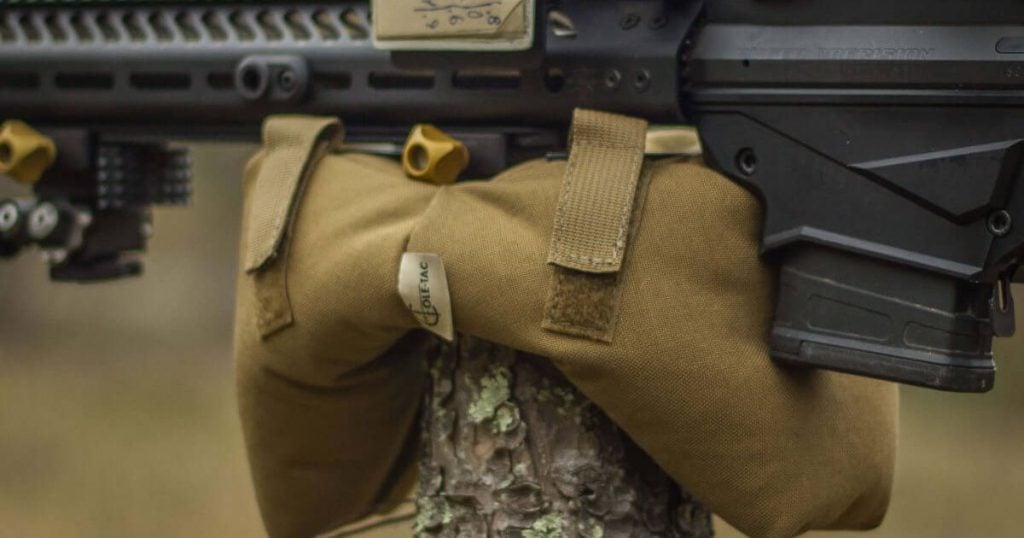
Two shooting bags can feel equally firm in your hands but respond differently when a rifle recoils against them. The fill material, how tightly it’s packed, and the bag’s construction all influence how much it compresses and how quickly movement settles.
Material Properties and Particle Movement
When force enters a shooting bag, the fill particles press against one another and shift within the bag. How easily they move depends on their size, shape, surface texture, and material.
For example, smooth, rounded particles may slide past one another more easily than rough or irregular particles. Greater friction between particles can resist movement and help dissipate energy, but it can also make the fill harder to reshape.
The material matters, too. Some particles deform under pressure, while others remain relatively rigid. These differences affect how the fill compresses and how much energy it stores or dissipates during impact.
Fill Amount and Packing
How much fill is inside the bag also changes its response. Even bags containing the same material can act differently depending on how tightly they’re packed.
- Tightly packed fill: Leaves less room for particles to shift. The bag may resist compression more strongly and transfer more of the load through the support.
- Loosely packed fill: Gives particles more room to move. The bag may deform more easily, but excessive movement makes it harder to maintain a consistent support shape.
- Moderately packed fill: Allows the bag to conform to the rifle while maintaining enough structure to resist excessive movement.
Fill density also plays a role, although the material’s weight alone doesn’t determine its response. How closely the particles are packed and how much space remains between them can be just as important.
The Bag’s Outer Shell and Contact Surface
The fill doesn’t respond to impact on its own. The outer shell controls how far the bag can expand or change shape as the material inside moves.
A tightly constructed shell can restrict deformation, while a more flexible shell may allow the fill to shift and conform more freely. The bag’s shape also affects where pressure concentrates and how the load spreads through the fill.
The surface beneath the bag also makes a difference. A bag resting on a hard barricade may respond differently than the same bag resting on a softer or uneven surface. Contact with the rifle also influences how force enters the bag.
Since these factors work together, changing the fill material, packing, or bag construction can change how the entire support responds.
What Cole-TAC Learned From Testing Shooting Bag Fill
Understanding how fill materials, packing, and bag construction affect impact response helps manufacturers make better design decisions. At Cole-TAC, we apply these ideas when developing our shooting bags and testing fill materials to see how they perform under impact.
For instance, while developing CompFill, we tested various materials to see how they responded to impact. Our team built a testing module that collected 4,000 measurements per second, allowing us to examine the initial impact, rebound, and how quickly vibrations diminished. We also experimented with stabilizers and mixing ratios to develop a fill that holds its shape while remaining moldable and pliable.
By comparing how different mixtures responded to impact, we evaluated more than initial firmness. The testing helped our team identify a fill that maintained its shape while reducing the movement that followed impact.
Why Fill Compression Matters
A shooting bag needs to do more than hold your rifle steady before the shot. How the fill compresses, rebounds, and settles also affects the support it provides during and after recoil.
Understanding these movements helps explain why two bags that feel similar can perform differently under impact. When evaluating a shooting bag, consider how well it maintains support and how quickly unwanted movement settles, not just how firm it feels in your hands.
Explore Cole-TAC’s Performance Fill and shooting support bags to find the right fit for your shooting.