
Rifle Shooting Positions for Hunters: Building Stability Beyond Prone
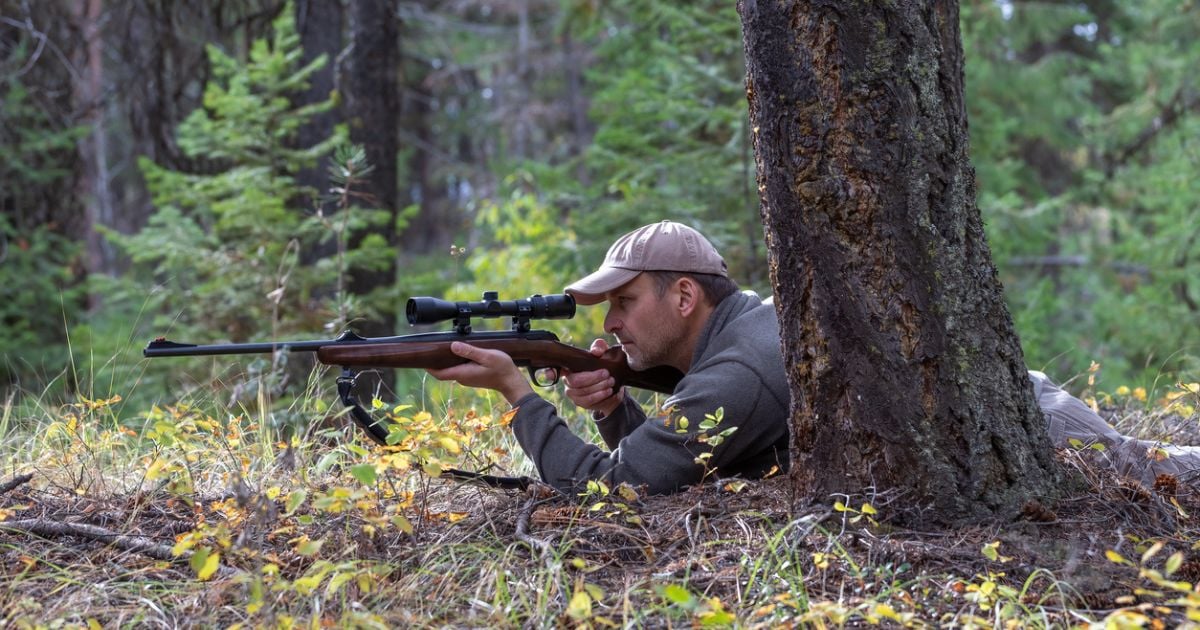
Most hunters spend time practicing prone position shooting because it’s the most stable setup. But field shooting rarely happens under perfect conditions. That is why learning multiple rifle shooting positions matters. The ability to adapt your position to the terrain often matters more than forcing the “perfect” setup.
What Are the Main Shooting Positions?
- Prone
- Seated
- Kneeling
- Standing
Each position solves a different problem in the field. Some prioritize maximum stability, while others prioritize speed, visibility, or mobility.
The challenge is knowing when to transition between them and how to build stability once you do.
Why the Prone Position Isn’t Always an Option
Prone position shooting is the most stable option, but in real conditions, it’s often the hardest to use.
Grass, brush, and uneven terrain can block your line of sight. When you’re flat on the ground, even low vegetation can completely hide your target. What looks clear from a standing position can disappear the moment you drop down.
Time is another factor. In hunting situations, you rarely get the chance to set up a perfect prone position. By the time you get fully settled, the opportunity may be gone. So you need positions that trade some stability for better visibility and faster setup.
Seated Position: Stability with Visibility
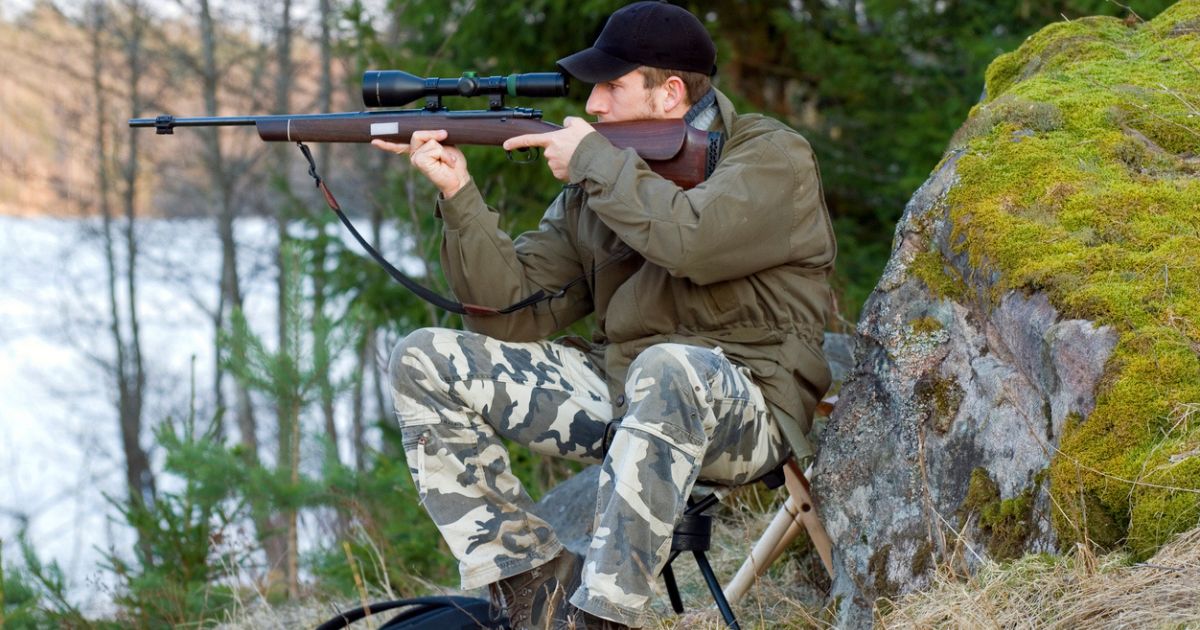
The seated shooting position is one of the most practical options in the field. It gives you enough height to see your target while still keeping a stable base.
When to Use It
This position works well when prone isn’t realistic, but you still have time to set up. Use it when:
- Vegetation is too tall for prone but not dense enough to block you fully.
- The terrain is uneven or rocky, making it hard to lie flat.
- You need a steady position without standing up.
The biggest benefit of the seated position is balance. You get more stability than kneeling or standing and more visibility than prone.
That combination makes it one of the most reliable shooting positions when conditions aren’t perfect. And, in many hunting situations, seated becomes the “default” once prone is off the table.
How to Build It
The seated shooting position works best when your body and the terrain support the rifle together.
- Start with a stable seated base. Some hunters prefer sitting cross-legged, while others keep their knees slightly apart to provide elbow support. Use whichever setup gives you the most stability on the terrain you’re on.
- Bring your elbows onto your legs. Resting your elbows on your knees or thighs creates support points that reduce arm fatigue and rifle movement. This is where a lot of the stability comes from.
- Lean slightly into the rifle. A slight forward posture helps you stay connected to the rifle during recoil. It also keeps the rifle from pushing you backward during the shot.
- If possible, add support to the rifle. A pack or support bag placed on your legs, against terrain, or on another stable surface can help reduce movement and steady the sight picture.
- Settle before breaking the shot. Once everything is in place, let the rifle settle naturally instead of forcing it still. Small corrections are normal, but large muscle tension creates more movement, not less.
Kneeling Position: Fast and Flexible
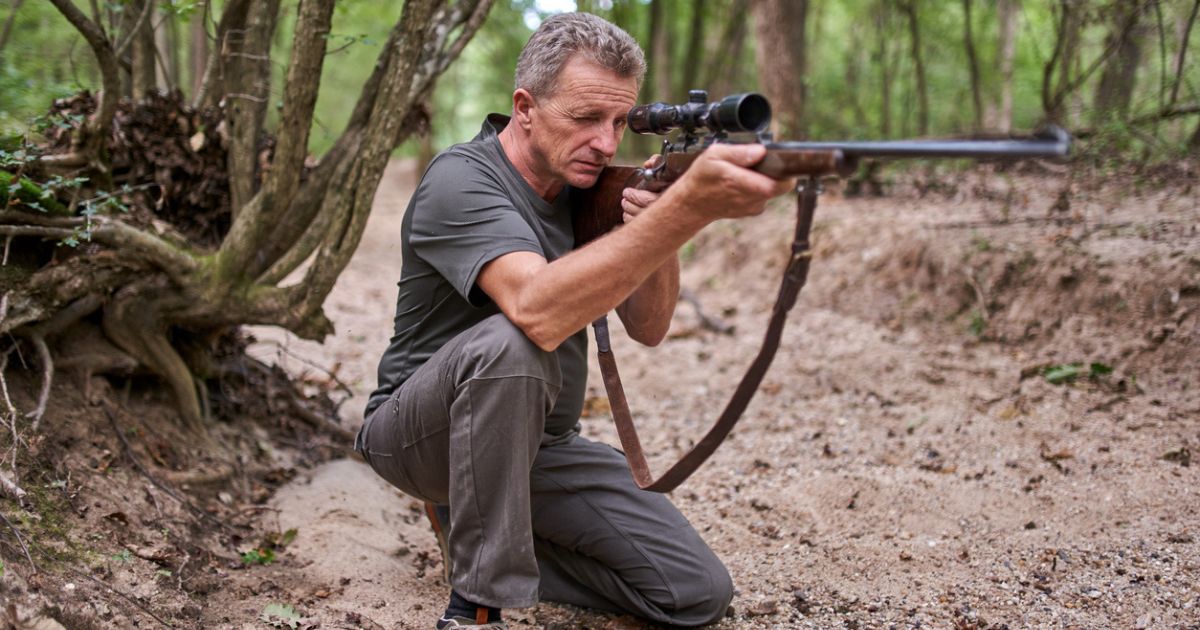
The kneeling shooting position is all about speed. It lets you get stable enough to take a shot without fully committing to the ground.
When It Works Best
Kneeling shines when you don’t have time to build a full position. It’s often the in-between position when prone is blocked and seated takes too long. Use it when:
- You need to take a shot quickly.
- The terrain changes fast and doesn’t support sitting.
- You’re moving through uneven or transitional ground.
Even though kneeling is faster to deploy, it offers less stability. You’ll have more movement than in seated or prone positions, and less forgiveness in your sight picture.
That trade-off is worth it when time matters, but it means you need better control to make a clean shot.
How to Build It
The kneeling shooting position works best when you build as much support into the position as possible without slowing yourself down too much.
- Start with a balanced kneeling base. Some hunters keep one knee on the ground with the opposite leg raised for elbow support, while others use a higher or lower kneeling variation depending on the terrain. Use whichever setup gives you the most stability.
- Bring your support-side elbow onto your raised knee (if possible). This creates a stable contact point that helps reduce wobble and rifle movement.
- Lean slightly into the rifle. A slight forward posture helps you stay connected to the rifle during recoil and keeps the position from feeling unstable or top-heavy.
- Use the terrain to add support when available. Rocks, trees, or slopes can help brace your body or provide a steadier rest for the rifle.
- If possible, add support to the position. A pack, support bag, rock, or other stable surface can help steady the rifle and reduce strain on your arms.
- Settle before breaking the shot. Kneeling positions naturally move more than seated or prone positions, so trying to force the rifle to remain perfectly still will create more movement.
Standing Position: When You Have No Other Option
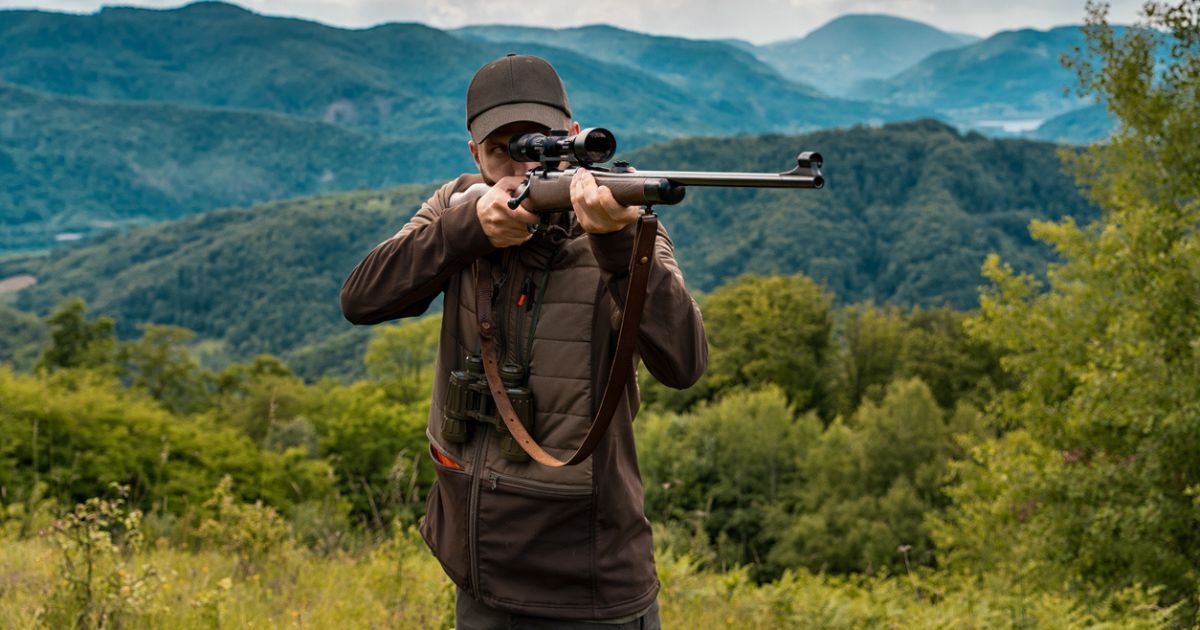
The standing shooting stance gives you the most freedom to move, but the least stability. It’s usually what you fall back on when nothing else works.
When to Use It
Standing comes into play when the environment limits your options. Common situations include:
- Tall brush or obstacles blocking lower positions.
- Fast-moving animals that don’t give you time to drop down.
- Tight or awkward terrain where sitting or kneeling isn’t possible.
In these moments, getting a shot off matters more than building a perfect position.
How to Build It
The standing shooting position is naturally unstable, so the goal is to reduce movement as much as possible and build support wherever you can.
- Start with a balanced standing base. Keep your feet about shoulder-width apart with a slight stagger in your stance so you feel stable without needing to shift your weight.
- Keep your movements controlled. Standing positions magnify small movements, so avoid unnecessary shifting, overcorrection, or muscle tension while aiming.
- Lean slightly into the rifle. A slight forward posture helps manage recoil and keeps the rifle from pulling you backward during the shot.
- Use available support whenever possible. Trees, rocks, pack frames, or other solid objects can help brace your body or provide a steadier rest for the rifle.
- Add support under the rifle if it’s available. A support bag or pack can help stabilize the rifle against terrain or other objects, especially when taking longer shots from a standing position.
- Focus on a smooth trigger press and steady follow-through. Standing positions rarely feel perfectly still, so the goal is controlled movement rather than eliminating it completely.
How to Build Stability in Any Shooting Position
No matter which shooting position you use, the same fundamentals still apply. Stable shooting comes from how you build the position, how you support the rifle, and how well you control movement during the shot.
Body Position
Your body is the base on which everything else depends. The more contact you have with the ground, the more stable you’ll be. That’s why lower positions tend to feel steadier since they naturally reduce wobble.
Focus on:
- Getting solid points of contact (legs, knees, elbows)
- Keeping your body relaxed, not tense
- Lowering your center of gravity when possible
Even small adjustments here make a difference in how steady your sight picture feels.
Rifle Support
Next is what’s actually holding the rifle up. You can use natural supports, such as rocks, logs, slopes, or ridgelines.
Or added support like packs, shooting support bags, or other gear you already have with you.
The goal is simple: take weight off your arms. The less your muscles have to work, the less movement you’ll see in the rifle.
Movement and Recoil
Once your position and support are set, stability comes down to control. Pay attention to:
- Your sight picture – keep it steady without forcing it
- Your breathing – let the shot break naturally
- Your follow-through – stay in position after the shot
A lot of missed shots come from unnecessary movement right before or right after the trigger press. Clean shots come from reducing that movement as much as possible.
Choosing the Right Shooting Position
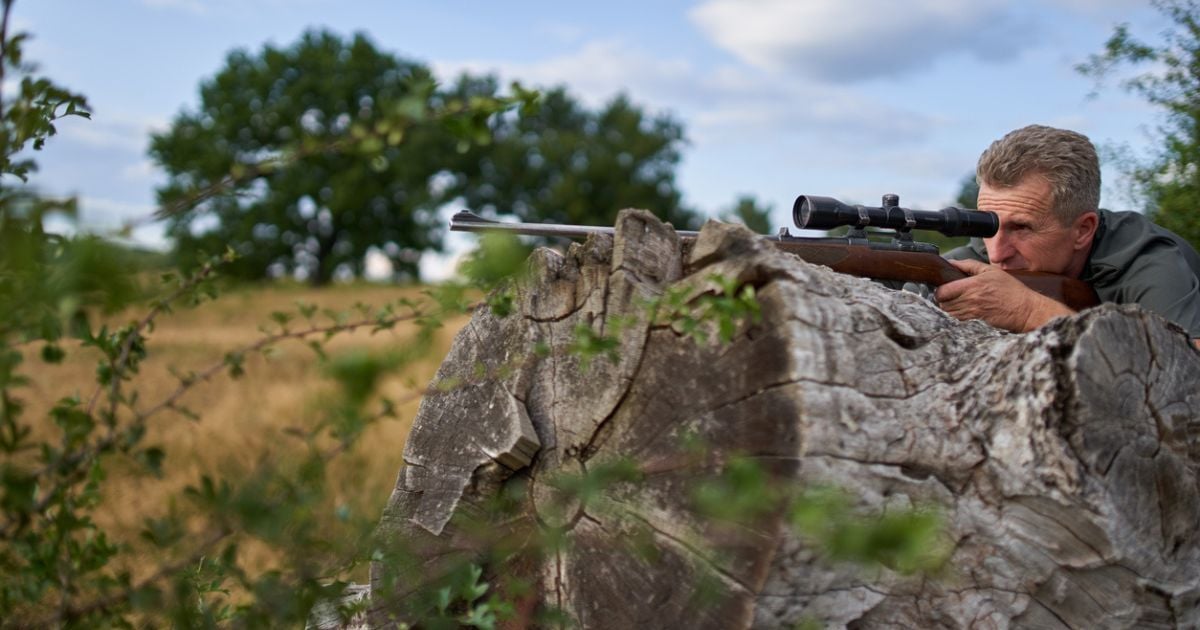
The “best” shooting position isn’t fixed. It depends on what the terrain gives you and how much time you have to take the shot.
Match the Position to the Terrain
Start with what’s in front of you. If the terrain blocks your view, the position doesn’t matter. Visibility comes first, then stability.
- Open ground often allows for prone or seated.
- Heavy cover may force you to kneel or stand.
Factor in Time and Shot Opportunity
Not every shot gives you time to set up perfectly.
- Fast shot → kneeling or standing
- More time → seated or prone
Trying to force a slower position when time is limited usually leads to rushed shots anyway.
Use Support Instead of Muscle
If you’re holding the rifle up with muscle, you’re already fighting movement. Instead:
- Rest the rifle on terrain, a pack, or a support bag.
- Let the structure hold the weight.
- Use your body to guide, not carry.
This reduces fatigue and keeps your sight picture more consistent.
The Best Shooting Position Is the One That Works
Good field shooting is not about memorizing one perfect shooting position. It is about adapting to terrain, visibility, time, and movement while still maintaining control of the rifle.
If you want to improve your field shooting setup, explore support bags and hunting gear from Cole-TAC designed to help stabilize your rifle in real-world hunting conditions.
For more about support bags, read: