
Layering for Cold Weather Hunting to Stay Warm, Light, and Mobile
Layering isn’t about piling on as much clothing as possible. It’s about trapping heat efficiently while keeping sweat under control. The goal is warmth through smart materials, not heavy clothing. A good setup keeps you comfortable whether you’re hiking uphill, glassing from a ridge, or sitting in a blind.
Three Core Layers
Building an effective layering system begins with understanding the purpose of each layer.
1. Base Layer: Moisture Management
Your base layer pulls sweat away from your skin so it can evaporate instead of cooling you down. Merino wool and synthetic fabrics are both great options because they dry quickly and stay breathable. Cotton, on the other hand, traps moisture and should be avoided.
2. Mid Layer: Insulation
The mid layer’s job is to trap body heat while still allowing air to circulate. Choose adaptable layers that regulate temperature when you’re on the move. For example, a breathable fleece keeps you warm while hiking but won’t overheat you once you stop moving.
3. Outer Layer: Weather Protection
The outer layer serves as a barrier against wind, rain, and snow while still venting moisture from inside. Look for waterproof hunting jackets, soft shells, or other outerwear made with windproof materials that are also quiet. Or if you like to DIY, learn how to waterproof your outer layer with our guide.
Together, these three layers provide you with the control to stay warm, dry, and mobile in changing conditions.
Balance Warmth With Mobility
Staying warm doesn’t mean you have to feel weighed down. The key to layering for cold-weather hunting is finding the balance between insulation and freedom of movement.
Start with slim, technical fabrics instead of bulky materials. Modern synthetics and lightweight insulation trap heat without adding stiffness or bulk.
Match your layers to your activity. If you’re hiking to a stand, wear lighter pieces that breathe and release excess heat. Once you stop to glass or wait, add an extra insulated layer to stay warm without sweating through your base layer.
Finally, keep your setup balanced. Evenly distributed weight (especially around your core and arms) helps you move naturally and stay comfortable. The goal is steady warmth, steady mobility, and the ability to adapt as the hunt changes.
Accessory Layers That Make a Difference
Even with a solid three-layer system, your hands, feet, and head lose heat fast, and that’s where the right accessories come in.
Start with hunting socks made for cold weather. Thick wool or synthetic blends keep your feet warm while wicking away sweat (which helps prevent blisters and numb toes). Add boot liners or heated insoles for longer sits in freezing temps.
Your head and neck also need coverage. A simple beanie or neck gaiter helps hold in body heat where it escapes most easily. These small items are easy to stash in a pack and make a big difference once the wind picks up.
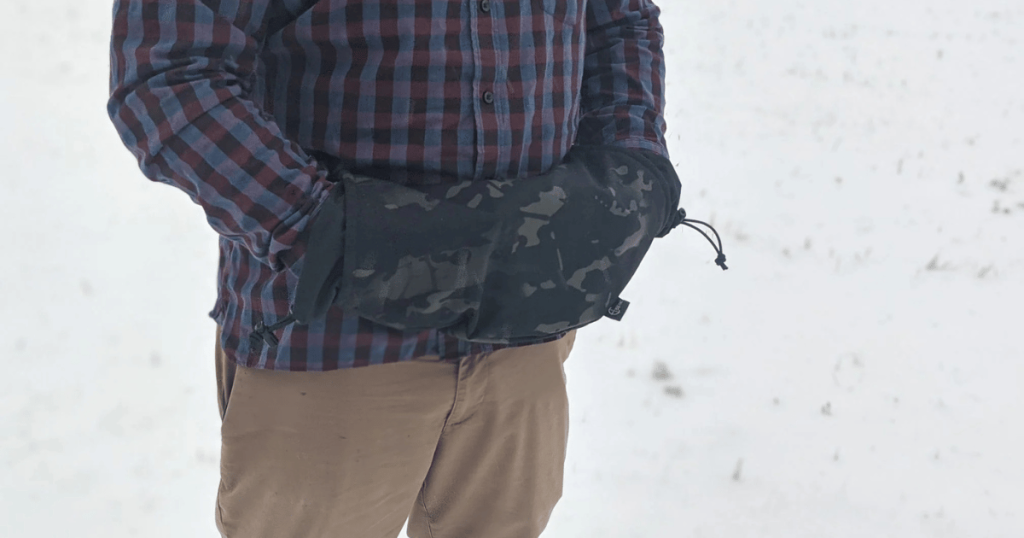
Cold hands can be the hardest to manage, especially if you’re using a rifle, tripod, or spotting scope. Try out a hand hut, like this one from Cole-TAC. It’s built to insulate your hands without taking away dexterity, so you can stay ready for a shot or adjust your optics without fumbling.
Other smart add-ons include lightweight gloves for active movement and insulated mitts for sitting still.
Tips for Smart Layering in the Field
A good layering system only works if you know how to manage it in real conditions.
- Start slightly cool. When you first head out, you should feel just a little chilled. As you start moving, your body heat will rise and fill that gap. If you start off warm, you’ll overheat fast and end up sweating.
- Adjust on the move. Take off a layer before hiking uphill or during active stalks. It’s easier to shed heat early than to deal with soaked layers later.
- Pack extras for multi-day hunts. A spare dry base layer can make a difference after a long, cold day. Swap out damp clothes before resting to keep your core warm.
- Skip the cotton. Cotton holds onto moisture, which pulls heat from your body once you stop moving. Stick with synthetics or merino wool instead since they’ll keep you dry and insulated.
Stay Warm, Light, and Ready
Cold weather doesn’t have to slow you down. With a well-planned layering system, you can hunt longer and stay comfortable.
Explore Cole-TAC’s hunting gear and other shooting accessories built for hunters who stay ready, no matter the temperature.