
Building Reliable Shooting Support in Western Terrain
In western hunting, support rarely comes from a perfectly flat surface. Instead, hunters often build stability around rocks, packs, brush, sidehills, and whatever terrain features are available at the moment. The ability to adapt support to those conditions can have a major impact on how steady the rifle feels and how consistently it performs during the shot.
Why Adaptable Support Matters More Than Rigid Precision
Rigid stability works well on controlled ranges with flat benches and predictable shooting positions. Western terrain removes those conditions almost immediately. That is why adaptable shooting support matters more than perfectly rigid support in the field.
Western Terrain Rarely Provides Flat Support
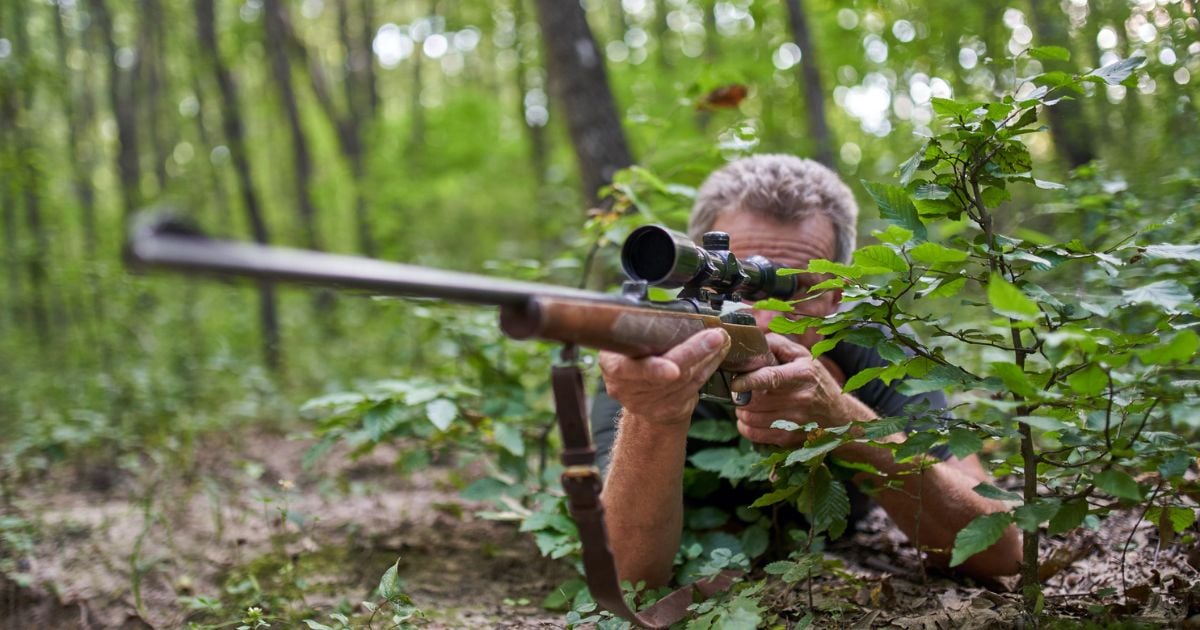
You may be shooting from sidehills, loose rock, uneven dirt, snow, brush, or sharp elevation changes. Even when prone is possible, the ground underneath the rifle may still create awkward support angles or unstable body positioning.
Vegetation creates problems, too. Tall grass, brush, and uneven features often force the rifle higher off the ground than expected. These changes in slope, footing, or rifle angle can affect how steady the position feels once you settle behind the gun.
In many western hunting situations, the terrain decides the shooting position long before the shooter does.
Flexible Support Often Creates Better Stability
Flexible support systems help fill gaps between the rifle and the terrain. Instead of balancing the rifle on a narrow contact point, the support settles into irregular surfaces, creating a broader, more stable connection. That can reduce unwanted movement without requiring perfect terrain.
You also see this during awkward field positions. Seated, kneeling, or partially supported positions often create uneven pressure points under the rifle. Flexible support helps stabilize those imperfect positions, rather than forcing the shooter to compensate with muscle tension.
In many cases, terrain-conforming support provides better stability because it works with the environment rather than fighting it.
Support Is About Stability Under Imperfect Conditions
Field shooting usually involves compromise. The terrain may not allow prone positioning. The rifle angle may feel awkward. Wind may force a faster shot than expected. Reliable shooting support helps reduce the impact of those problems without requiring perfect setup conditions first.
Western hunting support systems are designed to help build repeatable stability under imperfect conditions. Your goal is building enough repeatable stability to make a controlled shot while adapting to whatever terrain and conditions are available in the moment.
Building Support Across Different Shooting Positions
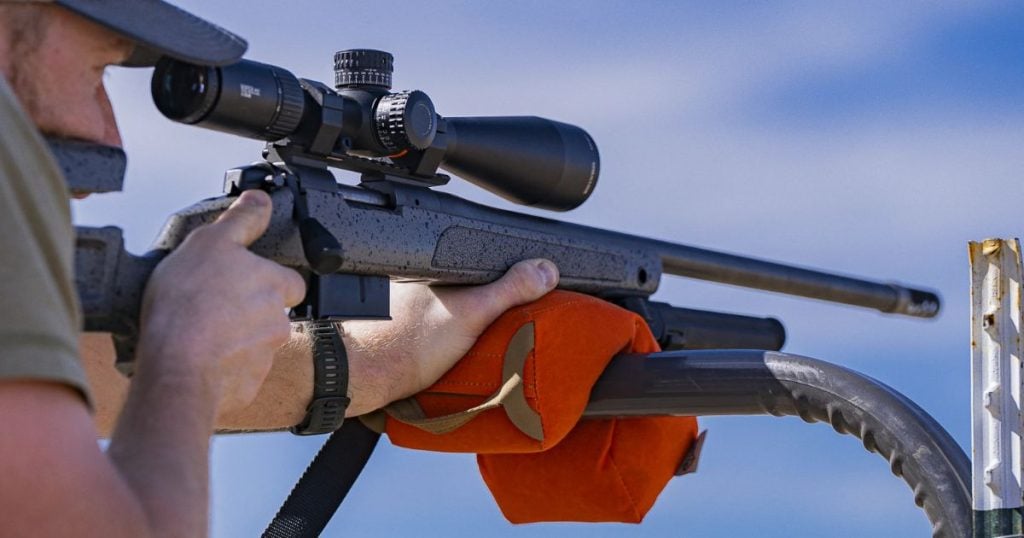
One shot may allow a prone setup, while the next may require sitting on a hillside or kneeling behind brush. Because of that, reliable shooting support needs to work across multiple positions.
Prone Support on Uneven Ground
Prone is often the most stable shooting position, but terrain can still make support challenging.
Support bags help fill gaps and create more consistent contact between the rifle and the ground. They also help reduce movement at the rear of the rifle, making elevation adjustments easier.
When building prone support:
- Place support under the fore-end where it creates the most stable contact.
- Fill gaps between the rifle and uneven terrain instead of balancing on high points.
- Add rear support under the buttstock whenever possible for better elevation control.
- Let the support carry the rifle’s weight instead of forcing the position with muscle tension.
Seated Support in Uneven Terrain
Seated positions often provide a balance between visibility and stability when prone is not practical. Support bags stabilize the rifle across knees, packs, rocks, terrain shelves, and other improvised support surfaces.
To improve seated support:
- Use your knees or a pack as the primary support surface.
- Add a support bag between the rifle and the support surface to reduce movement.
- Use rocks, ledges, or terrain shelves to create additional contact points.
- Adjust the support until the rifle naturally settles on target.
Kneeling Support for Faster Shots
Because kneeling naturally introduces more movement than prone or seated positions, support becomes even more important.
A support bag provides a stable foundation against rocks, packs, terrain features, or other available contact points while reducing some of the wobble common in unsupported kneeling positions.
When using support from a kneeling position:
- Look for terrain features before relying entirely on body support.
- Use support bags to stabilize the rifle against rocks, packs, or natural obstacles.
- Reduce wobble by creating as many contact points as conditions allow.
- Prioritize quick, repeatable stability rather than perfect stillness.
Standing Support and Terrain Integration
Standing positions generally depend the most on external support. Trees, rocks, pack frames, fence posts, and other terrain features often become part of the shooting platform.
Support placed between the rifle and the terrain reduces pressure points, improves rifle contact, and limits small shifts during aiming and recoil. Without additional support, standing positions can be difficult to stabilize, especially at longer distances.
To build standing support more effectively:
- Use trees, rocks, pack frames, or other solid objects whenever available.
- Place support between the rifle and hard surfaces to improve contact.
- Lean into stable terrain features rather than trying to hold the rifle unsupported.
- Reduce unnecessary movement before the shot by letting the terrain provide stability.
Choosing Shooting Support for Western Terrain
The right support system often depends on how you hunt, how far you move, and what types of terrain you encounter most often.
Lightweight Support for Mobile Hunting Setups
Mobile hunting setups usually benefit from lightweight support that deploys quickly and packs easily. They are easier to carry throughout the day, faster to reposition, and simpler to integrate into constantly changing terrain. Quick deployment also matters when animals are moving or when limited terrain only provides a short shooting window.
For example, the Bitty Bag was designed as a lightweight, wallet-sized support option that can serve as a micro rifle rest when minimizing weight is a priority. For hunters who want a lightweight rear support option, the Woobie Bag provides elevation control and quick adjustment without taking up much space.
Compact support bags can provide useful support without adding significant bulk to a pack.
Larger Support Bags for Uneven Terrain
Larger support bags often become more useful as terrain becomes rougher and less predictable. Instead of balancing the rifle on isolated pressure points, the support conforms to uneven terrain and spreads contact across a larger surface area. That usually creates better stability on awkward or irregular terrain features.
The Little Cuddle Bag and Cuddle Bag are designed to create support across a wide variety of positions and terrain features. For larger gaps created by steep slopes, awkward body positions, or uneven terrain, the Mega Bag provides even more surface area and support options. The Trap Bag is another versatile option because it can conform over rocks, logs, barricades, and other irregular surfaces while still providing a stable shooting platform.
When terrain becomes less predictable, larger support bags can help fill gaps between the rifle, the shooter, and the environment.
Rifle-Attached Support for Faster Deployment
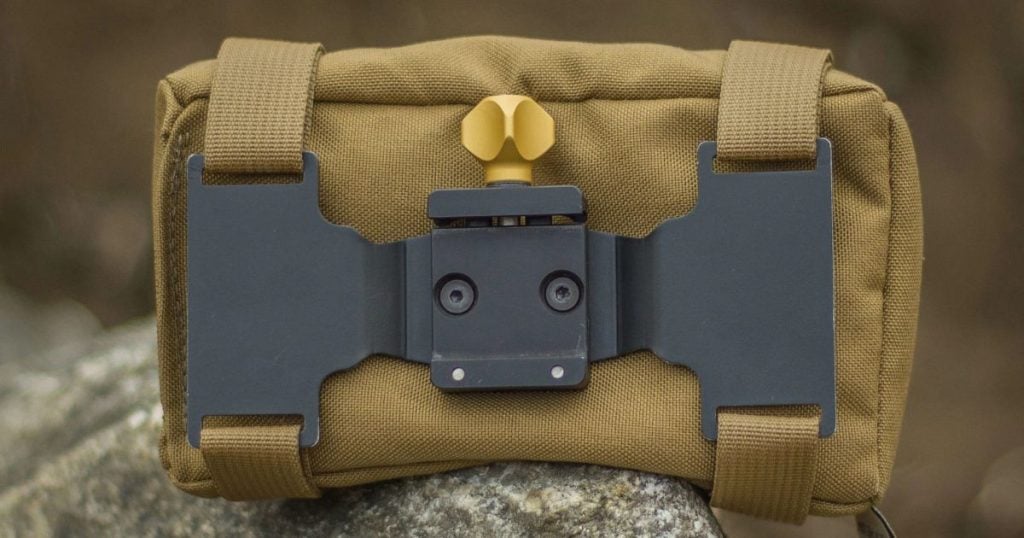
Mounted and rifle-attached support systems can help reduce setup time during fast-moving hunting situations. Because the support stays attached to the rifle, deployment often becomes more consistent between positions. This can reduce unnecessary movement while building support under time pressure.
Rifle-attached support also helps reduce the amount of gear handling required before the shot. Instead of locating and positioning separate equipment, the support system remains immediately available as the terrain changes.
The Backbone Bag Frame allows compatible support bags to mount directly to the rifle, helping reduce setup time and maintain consistent support between positions. Because the system works with multiple bag styles, hunters can tailor the support setup to different terrain conditions while keeping deployment fast and repeatable.
Multi-Position Support for Changing Conditions
Some hunting environments require frequent adjustments between shooting positions and support surfaces. A shot opportunity may begin from a seated position on a hillside, then shift to a kneeling position behind brush or an improvised support point along a ridgeline.
In these situations, versatility can be just as important as stability. Support systems that adapt to different positions and terrain allow hunters to maintain more consistent rifle support without carrying multiple specialized bags.
The Revolution Bag and Tricorne Bag were designed with adaptability in mind. Their shapes allow them to conform to a variety of support surfaces, including rocks, logs, uneven ground, and other improvised field supports. This flexibility can help maintain more consistent rifle contact as terrain conditions change.
Reliable Support Starts With Adaptation
The best support system is the one that matches how you hunt and the conditions you encounter most often. By understanding how different support options work across terrain and shooting positions, you can build more stable field setups.
Explore Cole-TAC support bags to find solutions designed for changing terrain, multiple shooting positions, and real-world hunting.