
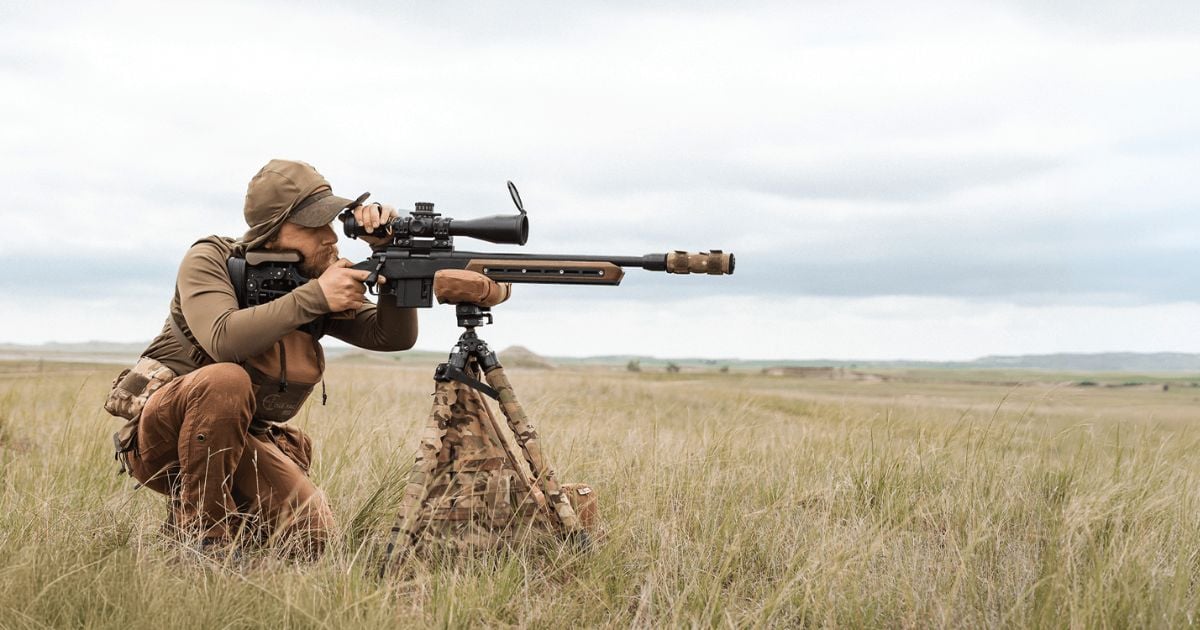
What Does It Mean When a Shooting Bag “Tracks Well”?
When shooters say a shooting bag tracks well, they mean the rifle moves through recoil in a controlled, predictable way. Instead of bouncing, twisting, or shifting unpredictably, the rifle settles into a repeatable position afterward. This behavior gives you a better chance of staying with the rifle rather than having to fight the setup between shots.
Good Tracking Starts With a Predictable Recoil Path
The first thing to watch is how the rifle moves when the shot breaks. A rifle that tracks well should move in a similar direction from shot to shot.
Some movement is expected, but the goal is to avoid adding unnecessary movement in other directions. For example, if the rifle moves rearward consistently, that movement is easier to follow than if it also rotates or moves sideways.
The shooting bag can affect the recoil path, but it doesn’t control it on its own. Rifle design, your position and input, and the support surface all play a role.
If the rifle repeatedly moves to one side, look at the support before assuming the bag is the problem. Check whether the rifle is sitting evenly on the bag, whether the bag is fully supported, and whether it’s rocking or sliding during recoil. Uneven contact or fill that has shifted to one side also changes how the support behaves.
Where the Rifle Returns Matters as Much as How It Moves
The recoil path is only part of tracking. Once the rifle moves through recoil, pay attention to where it settles. Does the rifle settle in roughly the same place? Does the bag stay planted on the support? Do the contact points between the rifle, bag, and support remain consistent?
Also, watch for a second bounce or movement before the rifle settles. Even with a consistent initial recoil path, extra movement afterward can make the final position less repeatable. A bag that tracks consistently should help the rifle settle into a similar supported position from shot to shot.
This is also why two shooting bags can feel equally stable before the shot but track differently once you start firing. Pre-shot stability tells you how the bag supports the rifle at rest. Tracking also tells you whether that support stays consistent through recoil and as the rifle settles afterward.
Fill Behavior Has a Major Effect on Tracking
Support bag fill affects how much a shooting bag compresses, how well it stays in place, and how consistently it supports the rifle through recoil. Two bags with similar shapes can track differently because their fill responds differently under load.
Fill Needs to Compress Predictably
Some compression helps the bag conform to the rifle and the surface underneath it. The important part is that the support changes in a similar way each time recoil loads the bag.
If the fill shifts too easily or compresses inconsistently, the rifle may sink farther on one shot than another. Support height and contact points can change along with it, making the rifle’s movement less predictable.
You want enough movement for the bag to conform while still providing repeatable support throughout the shot.
Heavier Fill Can Resist Bag Movement
A heavier fill can also help the bag stay planted as recoil is transferred through the support. If the bag slides, rocks, or shifts underneath the rifle, the rifle has to move across a support that’s moving at the same time.
That doesn’t mean heavier fill is always the better choice. It comes with extra weight, which may be worthwhile on the range but less practical when you’re carrying your gear in the field. The right choice depends on where you need the bag to perform and how much weight you’re willing to carry.
Bag Shape and Contact Also Influence Tracking
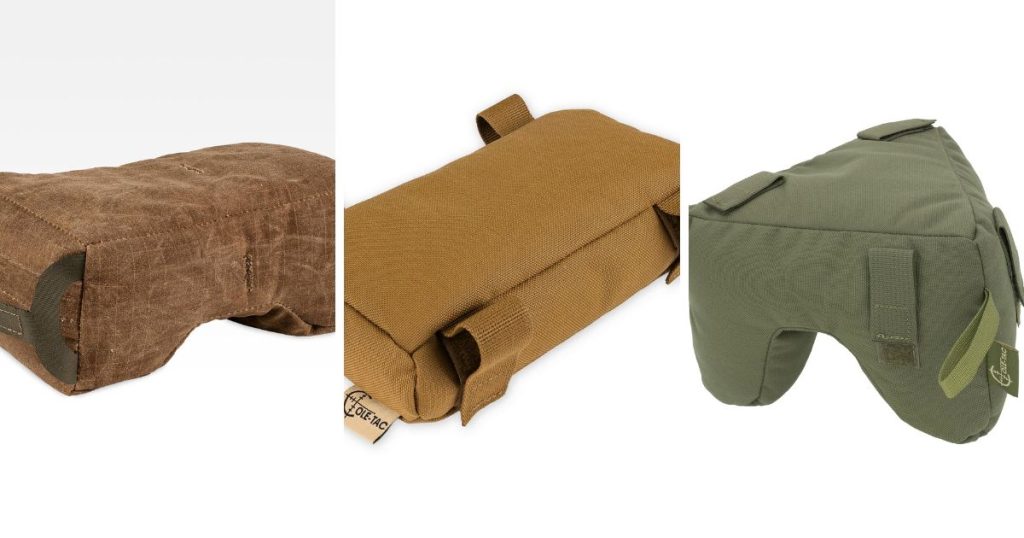
Fill isn’t the only part of a shooting bag that affects tracking. Bag shape plays a role because it determines how well the bag fits two surfaces: the rifle and the surface underneath it.
Consistent Contact Gives the Rifle Predictable Support
The bag should provide enough contact with the rifle to support it without creating gaps or uneven pressure. At the same time, it needs stable contact with the barricade, prop, ground, or other surface underneath it.
If the bag bridges over part of the support, sits unevenly, or doesn’t conform well to the surface, it may rock or shift under load. Choosing a bag shape that fits the support helps create a more repeatable interface between the rifle, bag, and shooting position.
This is also why a stiffer shooting bag isn’t automatically more stable. If stiffness prevents the bag from conforming to the rifle or support, the smaller or uneven contact area can work against stability.
Good Tracking Depends on the Complete Shooting Position
The shooting support bag is one part of a larger system, and changing another part can change how the rifle behaves through recoil.
Rifle weight, balance, recoil characteristics, and stock or chassis geometry all affect how the rifle moves. Your input matters, too, including whether you’re using the bag for front or rear support and where you place it.
For example, a bag that tracks consistently with a heavy competition rifle on a barricade may behave differently under a lightweight hunting rifle on uneven terrain. Neither situation necessarily tells you how the bag will perform in the other.
That’s why tracking is better understood as an interaction between the rifle, bag, shooter, position, and support surface rather than a fixed feature of the bag itself.
How Can You Tell If Your Shooting Bag Tracks Well?
The best way to determine if your shooting bag tracks well is to fire a consistent string and watch what happens before, during, and after recoil.
Start with the bag planted securely and the rifle supported. Then pay attention to the following as you fire:
- Initial movement: Does the rifle move predictably?
- Direction: Does it follow a similar recoil path from shot to shot?
- Bag movement: Does the bag stay planted, or does it rock, slide, or shift?
- Rebound: Does the rifle settle smoothly, or do you notice a second bounce or movement?
- Sight recovery: How quickly does the sight picture settle, and does it behave similarly each time?
- Return: Does the rifle settle into roughly the same supported position?
- Correction: How much input do you need before you’re ready for the next shot?
Run the same test on the types of support you expect to use. A bag may track consistently from a flat bench but behave differently on a barricade, tripod, or rock.
Better Tracking Means More Predictable Rifle Behavior
A shooting bag that tracks well doesn’t eliminate recoil. But it gives the rifle consistent support, so its movement and return are easier to predict from shot to shot.
If you’re choosing a new support bag, consider how its fill, shape, weight, and intended use fit your rifle and shooting style. Explore Cole-TAC’s support bags to find an option built for the way you shoot.