
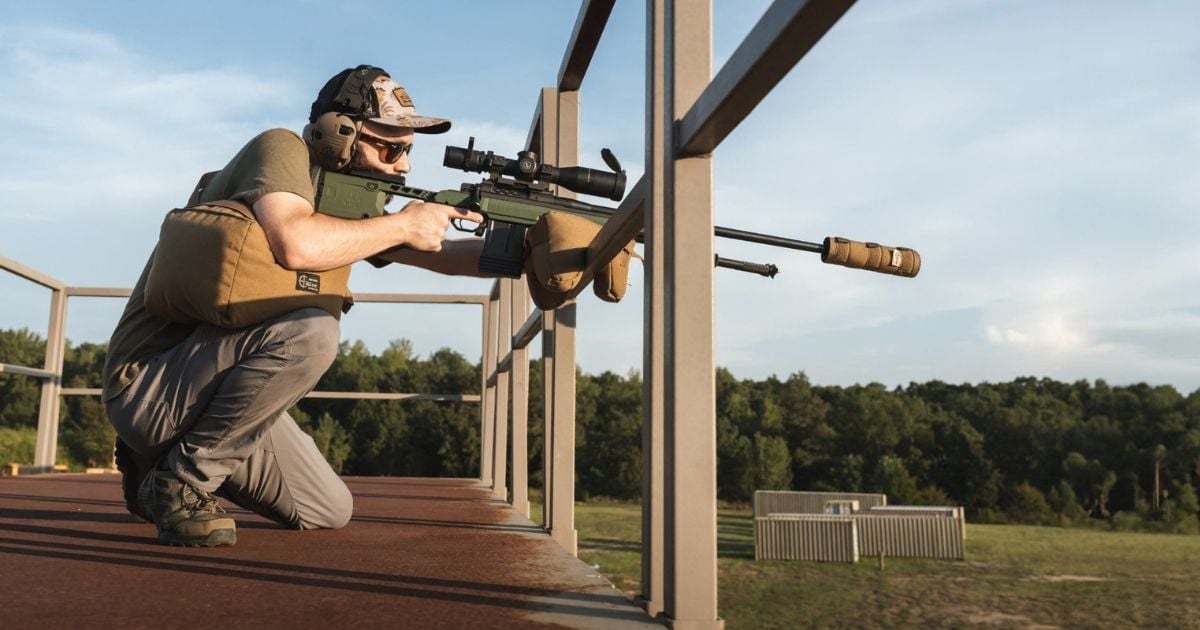
Why a Stiffer Shooting Bag Is Not Always More Stable
A firm shooting bag can feel stable the moment you put a rifle on it. But once you move from a flat bench to a barricade, natural rest, or another position, that same stiffness can start working against you.
Here’s why stiffness alone doesn’t determine stability and what to look for when choosing and setting up your shooting bag.
What Happens When a Shooting Bag Is Too Rigid
A stiff shooting bag becomes less stable when it can’t conform to the rifle and the surface supporting it. Stability depends on how well the bag, rifle, and supporting surface work together.
A Rigid Support Bag Connects Less With Shooting Surfaces
The limits of a stiff bag become easier to notice when the surface support isn’t flat, predictable, or easy to work around.
- Barricades and irregular props: A stiff bag may work well when its shape matches the support. As the geometry changes, though, it becomes harder to position without rocking or leaving part of the bag unsupported.
- Natural rests and uneven terrain: In the field, you have less control over the surface you’re using. Rocks, logs, uneven ground, and other improvised rests rarely provide a flat platform.
- Awkward positions leave less room for better bag placement: You won’t always be able to center the rifle perfectly on the bag or place the bag exactly where you want it. Your body position, available space, or the support itself can limit how much you can adjust either one.
A Rigid Bag Can Transfer More Movement Into the Rifle
Once you’ve built the position, the bag also has to respond to the small movements that happen while you’re behind the rifle. An overly rigid interface makes those movements more noticeable.
Small Inputs Have Less Room to Settle
Breathing, minor positional adjustments, and changes in pressure against the rifle all create small amounts of movement. An imperfect shooting position adds even more.
When the bag has little ability to compress or conform, those inputs have less room to settle within the support, so more of the movement is transferred to the rifle.
A bag with some conformity can provide a small amount of forgiveness while still supporting the rifle. The key is having enough give to accommodate minor inputs without allowing the rifle to sink or shift excessively.
Rigidity Can Contribute to Rebound
Rigidity can also affect how force moves through the rifle and bag. A support that compresses very little has less ability to absorb that movement before returning energy through the system.
That causes the rifle to move on the support. How much this matters depends on the bag, fill, position, and other parts of the setup.
Stable Support Depends on Consistent Contact
A shooting bag supports the rifle through the contact it creates above and below the bag. If either side has gaps or uneven pressure, the position will be less stable than the bag’s firmness suggests.
The Bag Needs to Conform to the Rifle
The bag needs to settle around the part of the rifle resting on it. If the fill can’t move or compress enough, the rifle will sit on a relatively small area of the support bag. The rifle will then be more prone to rocking or shifting as you settle into position or make small adjustments.
This doesn’t mean you need as much contact as possible. You need consistent contact that helps the rifle return to and maintain a repeatable position.
The Bag Needs to Conform to What Supports It
The same applies underneath the bag. A stable position depends on the bag making useful contact with the barricade, terrain, or other support.
Those surfaces aren’t always flat or even. If the bag has some ability to conform, it can settle around changes in the surface and create a more stable base. An overly rigid bag will sit on the highest points instead, leaving parts unsupported.
This ability to adapt becomes more important as the shape of the support becomes less predictable.
Fill Has a Major Influence on How a Shooting Bag Behaves
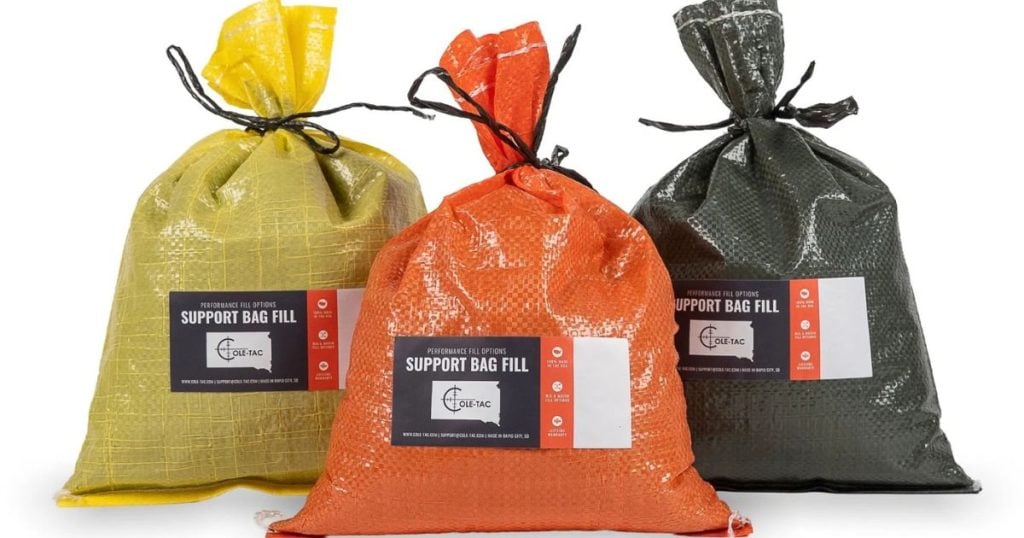
Fill affects how easily a shooting bag changes shape under pressure. Different materials move and compress differently, so two bags can feel very different even when they’re similar in size and shape.
This is why Cole-TAC offers three fill types so shooters can get the compression, movement, and weight they need from their shooting fill. Our UltraLiteFill is our lightest fill that creates a pillow-like feel. While our CompFill is a dense, heavy fill that provides stability and recoil control. If you want a fill with medium-weight and density, we offer CoreFill.
The amount of fill matters too. When a bag is packed tightly, the fill has less room to move and redistribute as you place it on a support. Giving the fill more room to move can make the bag more conforming. But keep in mind that too little fill creates its own set of issues.
Fill isn’t the only factor in how a bag behaves. The shell, shape, and internal structure also affect how the material moves. However, changing the fill or its amount can change the way a bag responds without changing its basic design.
Adjustable Fill Lets You Tune the Support
An adjustable shooting bag gives you some control over that behavior. Removing fill gives the material more room to redistribute, while adding fill creates firmer support.
There’s no single fill level that’s right for every bag or shooting position. So rather than assuming a tightly packed bag will be more stable, tune the support and judge it by how well it performs in your actual shooting positions.
For more about shooting bag fills, read our other guides:
- Shooting Bag Fill Matters More Than Most Shooters Realize
- The Best Shooting Bag Fill Depends on How You Shoot
- Heavy vs Lightweight Shooting Bag Fill
Test Stability on More Than a Flat Bench
A shooting bag can feel stable on a flat, controlled surface but behave differently when the support becomes narrower, angled, or uneven. So test the bag in conditions that reflect how you actually plan to use it.
Try it on:
- Flat supports: Establish a baseline for how the bag and rifle behave together.
- Narrow barricades: See whether the bag settles onto a smaller contact area without becoming difficult to balance.
- Angled or irregular surfaces: Check whether the bag adapts to the surface or tends to rock on high points.
- Natural rests: Use logs, rocks, or similar supports to see how the bag handles less predictable shapes.
- Different rifle orientations: Check whether the bag remains useful when you have to change how the rifle rests on it.
- Imperfect positions: Test situations where you can’t perfectly center the rifle or bag.
As you test, pay attention to what the support actually does. Does the bag settle into position without constant adjustment? Does the rifle rock? Are there noticeable gaps beneath the supported area? Do small movements behind the rifle easily disturb the position?
The shooting support bag you use should make it easy to build and maintain a stable shooting position. If it doesn’t do that, go back and check how much fill is in your bag, or whether you need a different type of fill to create the support you need.
Read the following guides to learn more about support bags:
- A Shooter’s Guide to the Best Support Bags
- How Rear Support Bags Improve Your Shooting Stability
- Choosing the Best Lightweight Shooting Support Bag
- Choosing the Best Rifle Support Bag for PRS & Tactical Matches
- Heavy Support Bags: Maximum Stability for Long-Range Shooters
Use a Shooting Bag That Can Adapt
A shooting bag needs enough structure to support your rifle without becoming so rigid that it can’t adapt to the position. The right balance depends on your rifle, the surfaces you shoot from, and how you use the bag.
Explore Cole-TAC support bags and fill options to find the bag shape, fill, and setup that fits the way you shoot.