
What Changed in Shooting Bag Design & Why It Matters
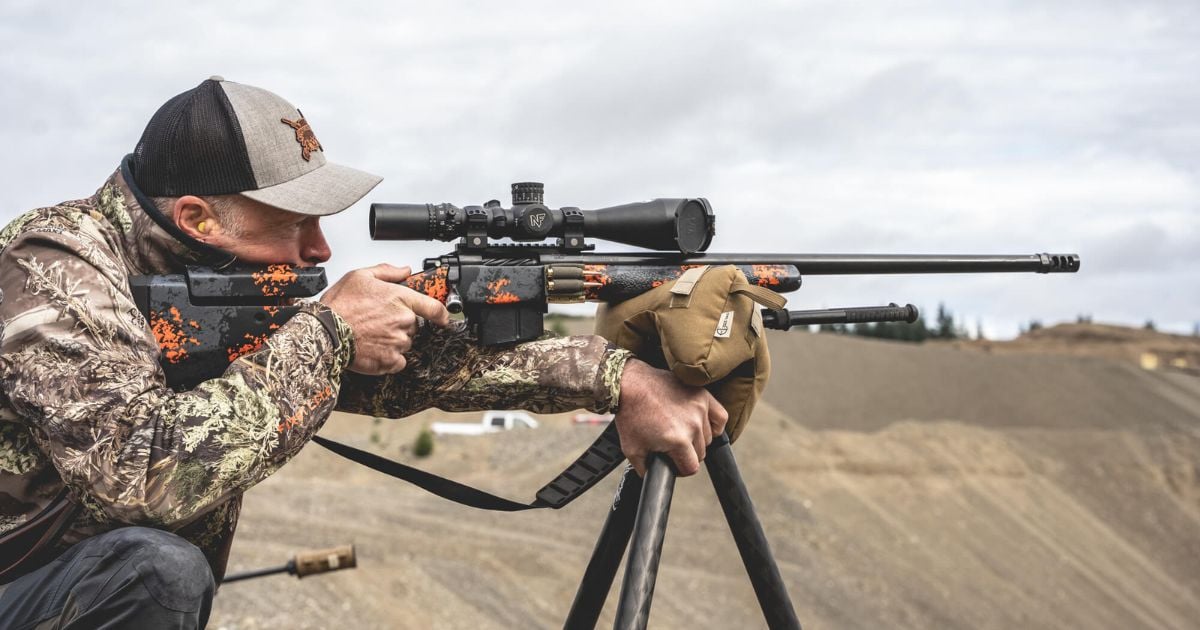
A basic shooting bag has a simple job: give your rifle a stable surface to rest on. For shooting from a bench, the ground, or another position, a straightforward rectangular or pillow-style bag can do that job well.
But shooters now ask bags to work in a wider range of positions. Competition stages and field shooting put your rifle over barricades, posts, fences, rocks, and other surfaces that aren’t flat or consistent.
That changed the priorities behind shooting bag design. A bag still needs to support the rifle, but that’s no longer the only feature needed. Shooters also consider how well the bag creates support when the surface, shooting position, or available contact area changes.
Modern purpose-built bags reflect those demands. Their shape, fill, and construction can all be designed around how the bag will interact with the rifle and the surfaces you encounter.
Shooting Bag Design Starts With Shape
One of the biggest changes in shooting bag design is the bag’s shape. Instead of a simple rectangle, manufacturers now use contours, channels, saddles, and cutouts to control how a bag sits against both the rifle and the surface beneath it.
These shapes give the bag more ways to interact with irregular supports. Rather than simply placing a flat bag on top of whatever is available, you can position different parts of the bag around or against the surface you’re using.
More Contact Creates a More Stable Interface
A bag that only touches the top of a narrow barricade has less contact with that surface. But the right design helps the bag sit around the available support instead of just balancing on top of it.
This can be useful on 2x4s, fence posts, rocks, barricades, and other surfaces that don’t give you a wide, flat platform.
Geometry Makes One Bag Useful in Different Orientations
The shape of a bag also creates several usable surfaces within the same design. Turning it flat, upright, or onto its side changes its height, contact area, or the channel available for the rifle.
These options come from the bag’s physical geometry. Rather than a single intended resting position, the shape offers several ways to place the same bag, depending on the support in front of you.
How Fill Works With the Bag’s Shape
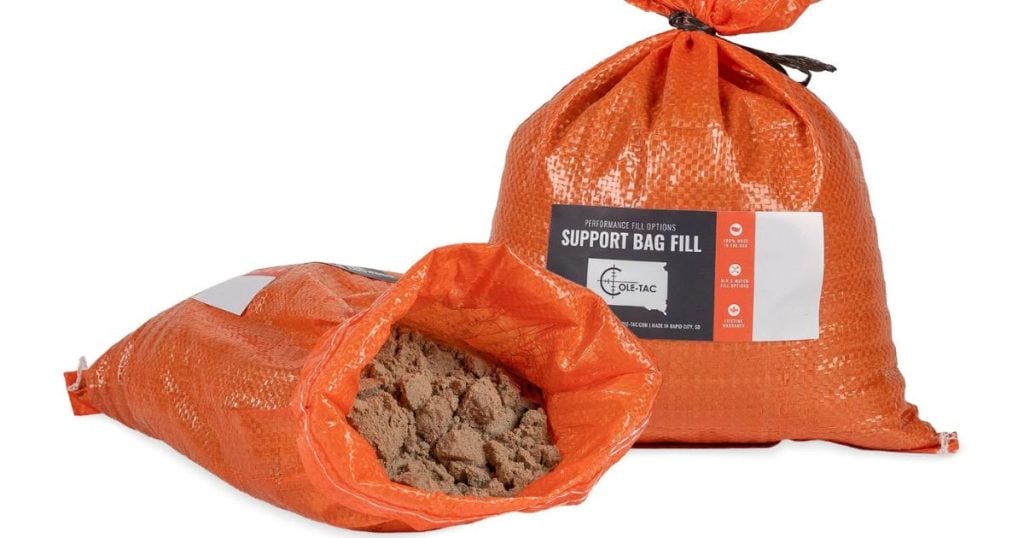
The type of fill matters because different materials move, settle, and hold their shape differently. Some prioritize weight and stability, while others reduce weight or conform more easily. The right choice depends partly on what the bag’s shape is designed to do.
Modern shooting bags pair the two so the fill moves where needed while still helping the bag maintain useful support. That makes the fill part of the design rather than material simply added to give the bag weight and volume.
The Bag Needs to Conform Without Losing Support
When you place a bag over a barricade or under a rifle, the fill needs to shift enough for the bag to settle around the contact points. If it moves too freely, the bag may not provide the resistance you want once you’re in position. You want a fill that conforms to the surface while still helping the bag keep its shape.
Adjustable Fill Lets Shooters Change How the Bag Behaves
Even with the right fill material, the amount inside the bag changes how it feels and performs. More fill generally creates a firmer bag, while removing some gives the fill more room to move and conform.
A bag with fill access lets you adjust that balance based on how you prefer to use it. Instead of being locked into one fill level, you can fine-tune the bag’s firmness and movement to suit your setup.
For more about shooting bag fillers, read The Best Shooting Bag Fill Depends on How You Shoot and Heavy vs Lightweight Shooting Bag Fill.
Internal Structure Controls What the Fill Does
What happens inside a shooting bag matters just as much as its exterior shape. In a simple open cavity, fill shifts from one area to another as you carry, rotate, or reposition the bag.
Some movement is necessary for the bag to conform. But if too much fill collects in one area, the bag becomes uneven and behaves differently depending on how you position it.
Baffles Help Maintain the Bag’s Shape and Balance
Internal baffles divide or control the space available for the fill to move. The fill can still shift enough to conform around the rifle or support, but it’s less likely to migrate freely from one end of the bag to the other.
This helps the bag stay more balanced as you change positions and orientations. It also makes its support more predictable because the fill remains distributed closer to where the bag’s shape was designed to use it.
The Revolution Bag Shows How Modern Design Works as a System
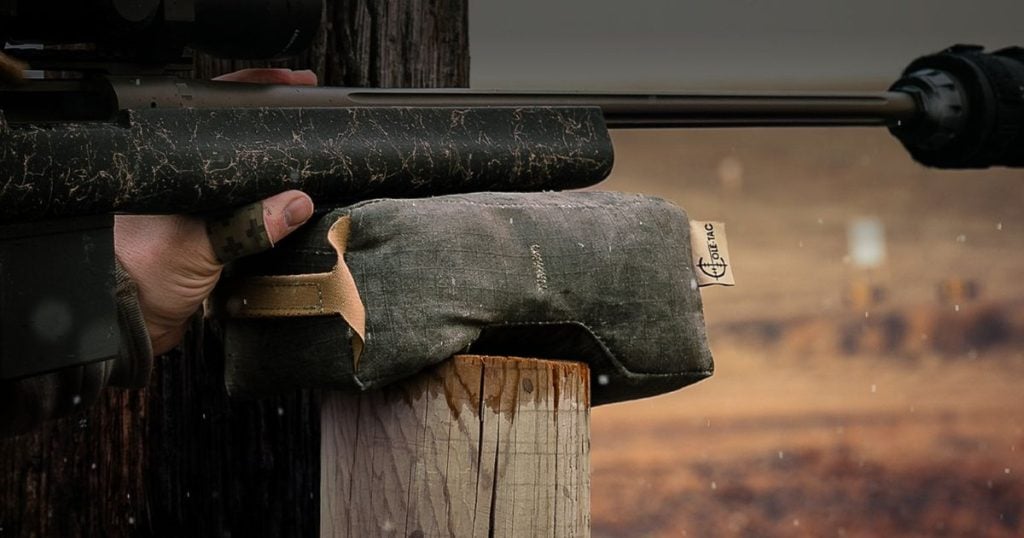
The Cole-TAC Revolution Bag is a good example of how these design elements work together. Its geometry, fill, internal structure, and size each play a role in how the bag performs.
The cutout at the bottom is shaped to fit around 2x4s while also accommodating other obstacles you may encounter. Inside, Cole-TAC’s Comp Fill shifts around those surfaces and holds its shape, while an internal baffle system helps keep the fill from migrating to one side of the bag.
The bag’s geometry also gives you several ways to position it. You can lay it flat for a broader top surface or turn it on its back to create a groove for the rifle. The same orientations provide different options when used as rear support.
At a smaller-to-medium size, the Revolution Bag also balances usable contact area with portability. A carrying handle makes it easy to move between positions, and the fill can be added or removed through the hook-and-loop opening to adjust how the bag behaves.
Each feature supports the others. The shape determines how the bag contacts the rifle and obstacle, the Comp Fill conforms within that shape, and the baffles help control the fill as you reposition the bag. The Revolution Bag highlights how shooting bag design has shifted from individual features to the bag as a complete system.
What Should You Look for in a Shooting Bag?
When comparing rifle shooting bags, think about where and how you’ll actually use them. A bag doesn’t need every possible feature. It just needs the right combination for the positions and surfaces you regularly encounter.
Consider:
- Shape: How will the bag interact with the barricades, props, or other surfaces you shoot from?
- Fill: Can it conform around those surfaces while still providing enough support?
- Internal construction: Does the bag control how its fill moves as you reposition it?
- Adaptability: Can you use different sides or orientations to create useful support in multiple positions?
- Adjustability: Can you add or remove fill to change the bag’s firmness and conformity?
- Portability: Does the size and weight make sense for how far and how often you’ll carry it?
To learn more about shooting bags so you can choose what you need, check out our other guides:
• A Shooter’s Guide to the Best Support Bags
• Why Every Shooter Needs a Multi-Use Shooting Bag
• Heavy Support Bags: Maximum Stability for Long-Range Shooters
• Choosing the Best Lightweight Shooting Support Bag
Choose a Bag That Works as a Complete System
When choosing a bag, look at how the design parts work together rather than focusing on a single feature. The best fit is the one whose size, geometry, fill, and adaptability match the way you actually shoot.
If you’re looking for a support bag built around this idea, check out the Revolution Bag and the rest of Cole-TAC’s shooting support bags.