
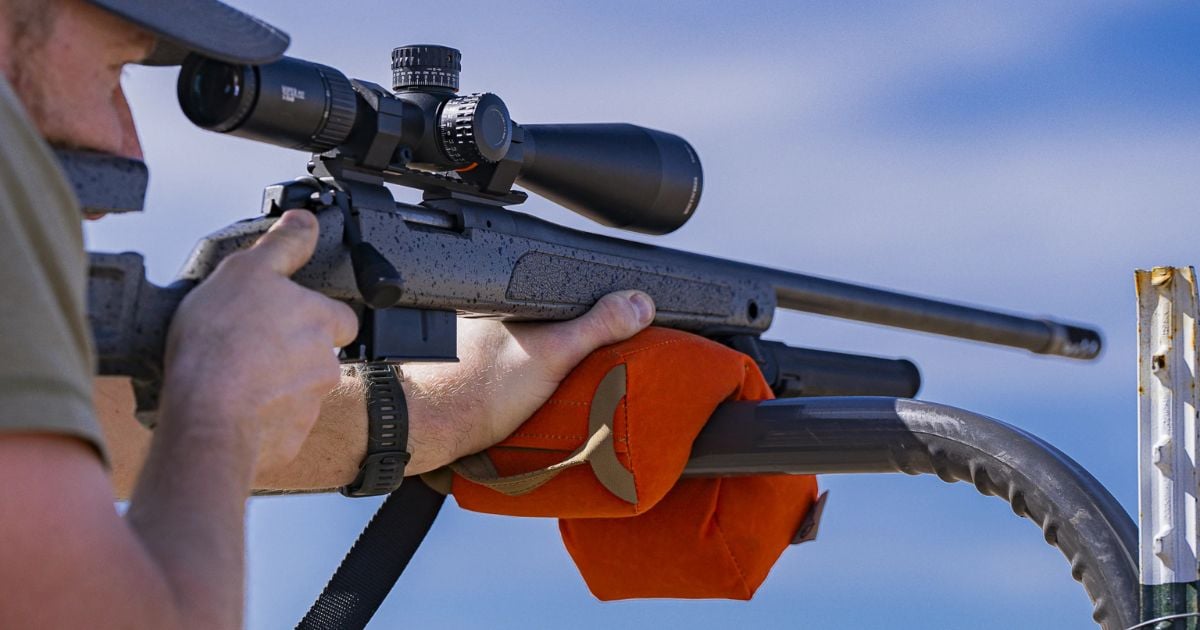
Why Impact Absorption Matters in Shooting Support Bags
A shooting support bag does more than support your rifle. The fill inside the bag affects how the rifle responds after every shot, influencing everything from rebound and vibration to how quickly you can get back on target. That’s where impact absorption comes in.
What Is Impact Absorption?
Every time you fire a rifle, recoil sends energy into your shooting bag. Impact absorption describes how the bag’s fill manages that energy after the shot.
A bag with good impact absorption does more than cushion the rifle. It dissipates recoil energy instead of reflecting it back into the firearm. As that energy spreads through the fill, damping helps reduce unwanted movement, and vibration dampening limits how long the rifle continues to move after the initial recoil.
Think about dropping a rubber ball onto concrete. It bounces because much of its energy is returned. Drop a lump of clay instead, and it barely rebounds because the material absorbs and disperses that energy.
Impact Absorption vs. Impact Resistance
Impact absorption and impact resistance are often used interchangeably, but they describe two different material properties. Understanding the difference helps explain why some shooting bag fills feel more stable than others.
Impact Resistance Helps Materials Withstand Force
Impact resistance describes how well a material withstands a sudden force without breaking, cracking, or deforming. It is a measure of durability rather than how the material handles energy.
For example, a material can be tough enough to survive repeated impacts without wearing out. That’s valuable in gear that sees heavy use, but it doesn’t necessarily mean it will make a better shooting support bag.
A highly impact-resistant material can still transfer much of the recoil energy back into the rifle. It may hold its shape and resist damage, yet provide very little damping or vibration control after the shot.
Impact Absorption Manages Energy
Impact absorption focuses on what happens to the recoil energy itself. Instead of returning that energy to the rifle, the fill dissipates it throughout the bag. This reduces rebound, minimizes vibration, and helps the rifle settle back into position.
In practice, this means the rifle settles sooner, rather than continuing to bounce or vibrate after recoil. This makes it easier to stay on target and maintain your shooting position.
For shooters, durability certainly matters, but so does the way a bag manages recoil energy. A fill that combines long-term durability with impact absorption can provide more consistent support throughout a shooting session.
Why Does Impact Absorption Matter When Shooting?
Every shot generates recoil. How your shooting bag handles that recoil affects how quickly the rifle settles back into a stable position. The sooner unnecessary movement stops, the easier it is to stay behind the rifle and prepare for the next shot.
Less Rebound Keeps the Rifle From Bouncing
After recoil, some shooting bags allow the rifle to bounce or shift before it settles. That extra movement can pull your sights off target and make the rifle feel less predictable.
A bag with good impact absorption reduces that rebound, helping the rifle settle quickly so you can maintain a steadier shooting position.
Faster Vibration Dampening Helps You Stay on Target
Even after the initial recoil ends, small vibrations continue moving through the rifle and support bag. Those subtle movements may not seem significant, but they can affect what you see through the scope.
Good vibration dampening helps those movements die out more quickly. As the rifle settles sooner, it’s easier to recover your sight picture, spot your own impacts, and make faster follow-up shots without waiting for the rifle to stop moving.
Stiffness Alone Doesn’t Create Stability
Many shooters assume a stiffer bag creates a more stable shooting platform. In reality, stiffness is only part of the equation.
A fill that’s too stiff can make the rifle feel harsher after recoil, while a fill that’s too soft may let the rifle shift more than you’d like. Neither extreme provides the most stable shooting platform.
Good stability comes from balancing firm support with controlled recoil behavior. The right fill keeps the rifle supported without causing unnecessary movement after the shot.
Why Bag Fill Behaves Differently Under Recoil
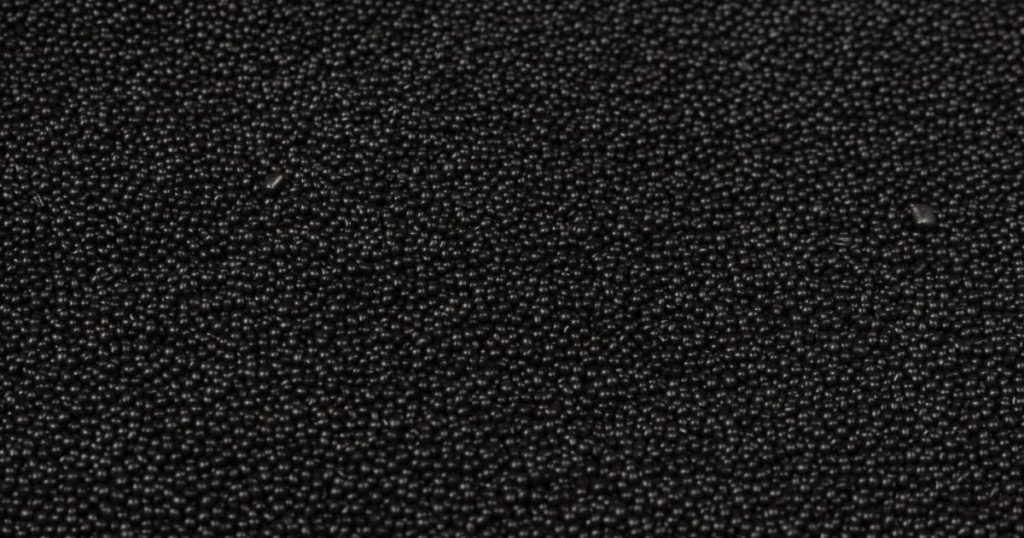
Two shooting bags can look nearly identical but respond very differently under recoil. The difference usually isn’t the bag design but how the fill behaves as recoil energy moves through it.
Material Behavior Affects Energy Transfer
When the rifle recoils, the fill inside the bag shifts as it absorbs the force. How those particles move against one another has a direct effect on how much energy is dissipated and how much is returned to the rifle.
As the particles move, they create internal friction. That friction helps convert recoil energy into small amounts of heat rather than letting it bounce back into the rifle. The more effectively the fill provides damping, the more efficiently it dissipates recoil energy.
Just as importantly, the fill needs to behave consistently from one shot to the next. This means the fill responds the same way, shot after shot, rather than compressing or settling unpredictably.
Moldability and Support Must Work Together
The fill should conform to the shape of the rifle so it creates solid contact without leaving gaps. At the same time, it should resist excessive shifting that allows the rifle to rock or settle into a different position after each shot.
After recoil, the fill should recover predictably. That predictable recovery allows the bag to provide the same support from shot to shot. These characteristics ultimately determine how the bag behaves under recoil and why different fill materials produce different shooting experiences.
Different Fill Options Prioritize Different Performance Characteristics
No single shooting bag fill is the right choice for every shooter. Each option emphasizes different performance characteristics, so the best choice depends on what matters most to your shooting.
At Cole-TAC, we offer several fill options, each designed around a different performance priority.
CompFill Prioritizes Maximum Damping
If your goal is to reduce rebound and help the rifle settle as quickly as possible after recoil, CompFill is designed around impact absorption. It focuses on damping and vibration mitigation. It’s best for shooters who want the most stable platform possible.
CoreFill Balances Overall Performance
CoreFill provides a stable shooting platform while maintaining versatility across a variety of shooting situations. For many shooters, it offers a practical balance of support, weight, and consistency without emphasizing one characteristic above the others.
UltraLiteFill Prioritizes Carry Weight
UltraLiteFill is built for shooters who spend more time carrying their gear than shooting from a single position. Its lightweight polymer beads reduce pack weight, making it a strong choice for hunting and long hikes where every ounce matters. While it still provides stable rifle support, its primary advantage is portability rather than maximum damping.
For a deeper look, read The Best Shooting Bag Fill Depends on How You Shoot and How Fill Weight Affects Rifle Behavior.
Choosing the Right Shooting Bag Fill
Whether your priority is maximum damping, balanced all-around performance, or keeping pack weight to a minimum, selecting the right fill helps you build a more stable and predictable shooting platform.
Explore our shooting bag fill options to compare CompFill, CoreFill, and UltraLiteFill, and choose the one that best matches your rifle, shooting style, and field conditions.